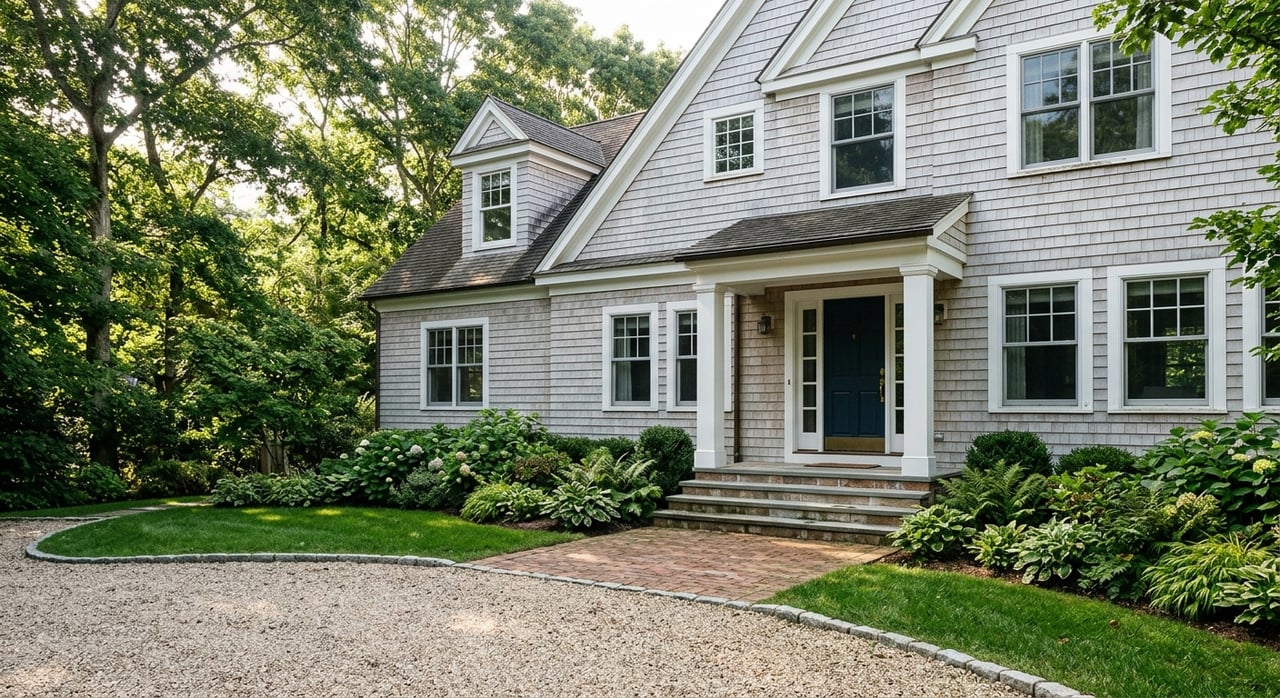
Weston vs Westport Homes: Compare Lifestyle and Fit
May 21, 2026
May 21, 2026
If you are deciding between Weston and Westport, you are not just comparing two Fairfield County towns. You are choosing the pace, setting, and daily rhythm that will shape your next chapter. The good news is that both towns offer strong appeal, but they do so in very different ways. Here is a clear look at how Weston and Westport compare so you can focus on the lifestyle that fits you best.
Weston and Westport sit close to each other, but official town data show two distinct living experiences. Weston is defined by a more residential setting, two-acre zoning, limited commercial development, and a strong open-space identity. Westport offers a shoreline setting, a larger population, a more active downtown, and direct commuter rail access.
In simple terms, Weston tends to appeal to buyers who want privacy, land, and a quieter day-to-day environment. Westport often fits buyers who want coastal access, more local amenities, and easier commuting options. That difference shapes everything from housing patterns to errands, recreation, and resale positioning.
Weston describes itself as a residential community about 45 miles from New York City, with two-acre property zoning and minimal commercial development. The town also highlights the absence of heavily trafficked commercial roads, which supports its quieter feel. If your ideal day starts with wooded surroundings and ends in a lower-key setting, Weston may line up with that vision.
Open space is a major part of Weston’s identity. Planning materials say about 29% of the town is open space and recreation. The town also points to nature-focused assets like Devil’s Den Preserve, Morehouse Farm Park, and Lachat Town Farm.
That adds up to a lifestyle centered on room to spread out. You may find that Weston feels more essentials-driven, with the town center serving as the main commercial destination and gathering spot. For many buyers, that is the appeal rather than a drawback.
Westport presents itself as a live-work-play community about 40 miles from New York City. The town highlights Long Island Sound access, two business centers, a lively downtown, and more than 70 restaurant options. If you want more activity built into daily life, Westport offers a broader menu of choices.
Shoreline amenities are one of Westport’s clearest differentiators. Official town information notes four town beaches, along with recreation assets such as Compo Beach and Longshore Club Park. That coastal layer can shape how you spend weekends, entertain guests, or simply enjoy the area year-round.
Westport also tends to feel more amenity-rich. Census retail sales per capita are much higher in Westport than in Weston, which is a useful proxy for a larger local commercial base. In everyday terms, that often translates into more options close to home.
If school structure matters to your move, the two towns differ in size and layout. Weston Public Schools serves K-12 through two elementary schools, one middle school, and one high school, along with an early learning center for preschool special education needs. The district also notes that its schools sit on a 117-acre wooded campus.
Westport Public Schools serves K-12 through five elementary schools, two middle schools, and one high school. NCES data lists Weston as a 4-school district with 2,101 students and an 11.35 student-teacher ratio. Westport is listed as an 8-school district with 5,281 students and a 10.63 student-teacher ratio.
The most useful takeaway is not rankings. It is structure. Weston offers a smaller, more centralized setup, while Westport has a larger system spread across more campuses.
For many buyers, convenience is where the two towns separate quickly. Westport has direct Metro-North service through the Westport and Green’s Farms stations. Official transit and town sources also note access to I-95, U.S. 1, the Merritt Parkway, Amtrak, and a local commuter shuttle.
Weston does not offer the same in-town rail access and is more clearly defined by its residential road network. Census QuickFacts shows a mean travel time to work of 40.9 minutes in Westport and 46.6 minutes in Weston. While commute needs vary by household, the data support Westport as the more commuter-convenient option.
That difference can influence more than the workweek. It can affect how easily you get to dining, regional shopping, or nearby towns on a regular basis. If seamless access is high on your list, Westport has an edge.
Housing style is another area where the contrast becomes practical. Weston’s official town description emphasizes two-acre property zoning, which supports a more consistent pattern of larger-lot living. That can be especially appealing if you want privacy, more yard space, and a more uniformly residential setting.
Westport offers more variety. The town says its single-family homes are primarily on 1- and 2-acre lots, ranging from modern coastal homes to quaint residences in walkable neighborhoods near downtown. Westport zoning also includes a wider mix of district standards, which helps explain the broader range of housing types and settings.
If you are deciding between the two, it often comes down to this: do you want more predictably spacious lot patterns, or do you want more choice in how close you live to amenities and the shoreline? Neither answer is better. It just depends on how you want to live.
Census QuickFacts gives a useful market snapshot. The median owner-occupied home value is $1,405,200 in Westport and $996,700 in Weston. Owner-occupied housing rates are also high in both towns, at 88.8% in Westport and 96.9% in Weston.
Those figures do not tell the whole story of any individual property, but they do help frame each market. Westport’s higher median value aligns with its coastal setting, transit access, downtown activity, and broader amenity base. Weston’s data reflect a market that still commands strong value while often appealing to buyers who prioritize land, privacy, and a quieter setting.
For sellers, understanding that buyer motivation matters. A home in Weston and a home in Westport may both be desirable, but they are often desirable for different reasons.
Property taxes deserve a close look when you compare towns. In Connecticut, real estate taxes are based on assessed value, and Westport’s tax FAQ notes that assessment equals 70% of fair market value. For FY 2025-26, the official state OPM mill rates are 18.86 for Westport and 23.90 for Weston.
Using a simple example, a property with a $1,000,000 assessed value would carry about $18,860 in annual town property tax in Westport and about $23,900 in Weston, before any exemptions. That does not mean one town is automatically less expensive overall, because home values differ. It does mean the tax structure is an important part of the side-by-side comparison.
Timing also matters. Westport is in a 2025 revaluation cycle, and the town says resulting values and taxes will be determined after the mill rate is set in 2026. Weston’s assessor states that its town-wide revaluation was completed October 1, 2023, and those values remain in place until the next revaluation in 2028.
If you picture a home surrounded by more land, a wooded backdrop, and a quieter daily pace, Weston may feel like the right match. Its identity is closely tied to privacy, open space, and a more residential environment. For many buyers, that consistency is exactly what makes it special.
If you want shoreline access, a lively downtown, direct rail service, and more day-to-day options nearby, Westport may be the stronger fit. It offers a broader mix of housing settings and a more active local lifestyle. That can be especially compelling if convenience and amenities are central to your move.
From a resale perspective, the available data support a simple frame. Westport’s coastal access, transit, downtown, and housing variety can support a broader buyer pool. Weston’s acreage, open space, and quieter road network tend to attract a more targeted group of buyers who are highly motivated by privacy and land.
The best choice comes down to what you want your home to do for you every day. If you are weighing a move to Weston or Westport, or preparing to position a home for sale in either market, Elizabeth Altobelli offers the local insight and polished guidance to help you move with clarity.
Stay up to date on the latest real estate trends.
With extensive experience and expertise, Elizabeth is well-equipped to navigate this complex market, negotiating with her client's best interests in mind. She holds great reverence for the successful family business, which led to her joining William Raveis.
Get In Touch With Me To Learn More
Elizabeth Altobelli
2525 Post Road Southport, CT 06890