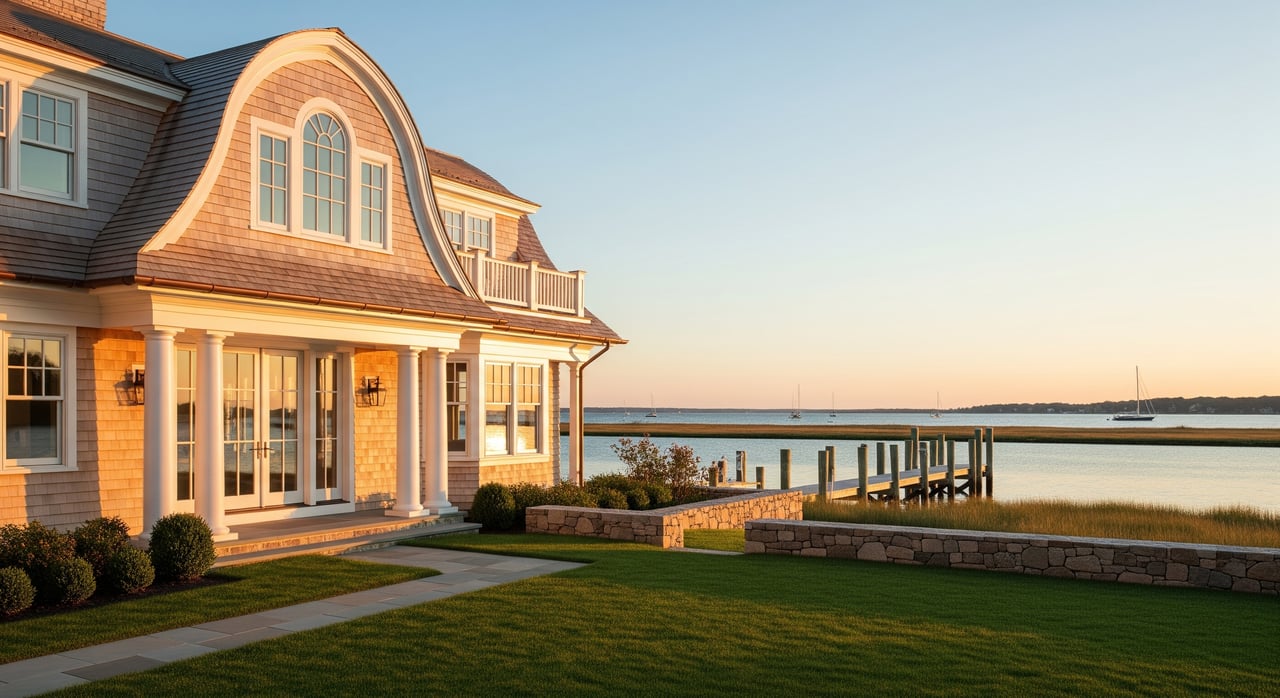
Data-Driven Westport Strategies for Luxury Home Pricing
January 15, 2026
January 15, 2026
Pricing a luxury home in Westport is not guesswork. The wrong first price can cost you months of time or six figures in missed value. If you want top dollar without lingering on the market, you need a pricing plan grounded in local data and buyer behavior. In this guide, you’ll learn a clear, repeatable way to set your list price using Westport‑specific metrics like months of inventory, DOM patterns, buyer pool size, and smart price thresholds. Let’s dive in.
Luxury is local. You can define it two ways:
For accuracy, pull recent data from SMART MLS. Compute the 90th percentile sale price for the last 12 months to set your current luxury threshold, then review 3‑ and 6‑month windows to check momentum. Use Connecticut REALTORS, NAR guidance, Westport Assessor records, FEMA flood maps for waterfront risk, and reputable local brokerage reports to round out context.
Absorption rate per month equals closed sales per month divided by active listings at month end. Months of inventory (MOI) equals active listings divided by average monthly closed sales. These are inverse measures. Practitioners often read MOI this way: under 3 months is hot, 3 to 6 months is balanced, and over 6 months is buyer‑leaning. In luxury tiers, viable MOI can be higher because inventory is thinner and buyer pools are smaller.
Do not rely on averages. Report median and percentile DOM by tier, and build a simple survival curve that shows the share of listings still active at 30, 60, 90, and 120 days. Create separate curves for luxury vs non‑luxury, and for sub‑segments like waterfront vs non‑waterfront. This reveals the true time‑to‑contract patterns your price will face.
Estimate buyer pool size by counting unique buyers who closed in each tier over the last 12 months, and use showing data to gauge how many are currently active. Expect the pool to shrink as price rises. In Westport, different tiers draw different profiles, including local upgraders, NYC‑area commuters, and second‑home buyers.
Translate your goal into one of three list‑price bands. Each band uses market metrics to balance speed, exposure, and net proceeds.
For all bands, model a negotiation buffer. A common planning range for offers vs list is 3% to 7%, but confirm the current Westport luxury band norms before you launch.
Buyers anchor around left‑digit thresholds like 1,000,000, 2,000,000, and 3,000,000. Pricing just below a cutoff, such as 1,995,000, can boost early attention. In some luxury segments, exact round numbers can signal poise and confidence. Review Westport comps to see which approach attracted more qualified tours and faster offers.
MLS and portal filters typically jump at neat steps such as 999,999 to 1,000,000, 1,499,999 to 1,500,000, and 1,999,999 to 2,000,000. If pricing slightly under a cutoff materially expands your buyer reach, consider landing on the lower side unless your marketing targets buyers above that threshold directly.
Use a simple three‑step path to align your list price with your time horizon.
Assume your Westport luxury tier has 36 active listings and closed 108 sales over 12 months, or 9 per month. MOI is 36 divided by 9, which equals 4 months. Your sub‑band is 2 to 3 million.
If your target is a 60‑day contract, you would likely choose Band 1 or Band 2 based on your carrying costs and negotiation buffer. If your carrying costs are high, Band 1 may deliver a better net even at a slightly lower headline price because you reduce time and risk.
The first 2 to 4 weeks are critical. Concentrate showings, broker previews, and direct outreach to known buyers. Track a short list of KPIs in a weekly dashboard:
Set decision points at 2, 4, 8, and 12 weeks. If showings and CTR lag your chosen band’s benchmarks, consider a targeted price move or a marketing reset at the first or second checkpoint. Avoid a string of small reductions. Plan meaningful, staged adjustments and pair each change with fresh marketing.
Westport’s luxury set is small and varied, from waterfront estates to new construction and renovated classics. Expect wider spreads in price per square foot. Weigh qualitative comp adjustments carefully for land, views, renovation level, and time.
If a property sits in a flood zone, insurance costs and lending terms can affect the buyer pool and timeline. Always review FEMA maps and local elevation notes for coastal addresses. Price appropriately for risk and disclosure requirements.
Commuting professionals and second‑home buyers can drive seasonal patterns. Align your launch and pricing checks with periods of strongest demand to maximize early momentum.
Aspirational pricing requires a clear time horizon. Model taxes, insurance, maintenance, mortgage interest, and opportunity cost. Decide how long you will test a premium before shifting bands.
Zoning, coastal management and permit histories can affect buyer confidence and close timing. Surface any known issues early and price with transparency.
Because sample sizes can be small, present a distribution of outcomes. Share best‑case, most likely, and downside scenarios for time and net proceeds so you can decide with clarity.
Data sets your strategy. Presentation helps your price perform. Elizabeth pairs a boutique, design‑forward listing experience with institutional reach to expand buyer pool and deepen engagement:
Match the marketing to your band. Band 1 favors broad, immediate exposure and fast staging. Band 2 mixes targeted outreach with steady MLS momentum. Band 3 layers in high‑touch storytelling, invitation‑only events, and wider luxury buyer networks.
Use this quick template before you set your list price:
Pricing a Westport luxury home is a strategy, not a guess. Define the tier, run the key metrics, and choose the band that aligns with your goals and timeline. Then launch with standout presentation and commit to a disciplined feedback loop. If you want a data‑driven plan paired with white‑glove execution, connect with Elizabeth Altobelli to craft your pricing strategy and go to market with confidence.
Stay up to date on the latest real estate trends.



With extensive experience and expertise, Elizabeth is well-equipped to navigate this complex market, negotiating with her client's best interests in mind. She holds great reverence for the successful family business, which led to her joining William Raveis.
Get In Touch With Me To Learn More

Elizabeth Altobelli
2525 Post Road Southport, CT 06890