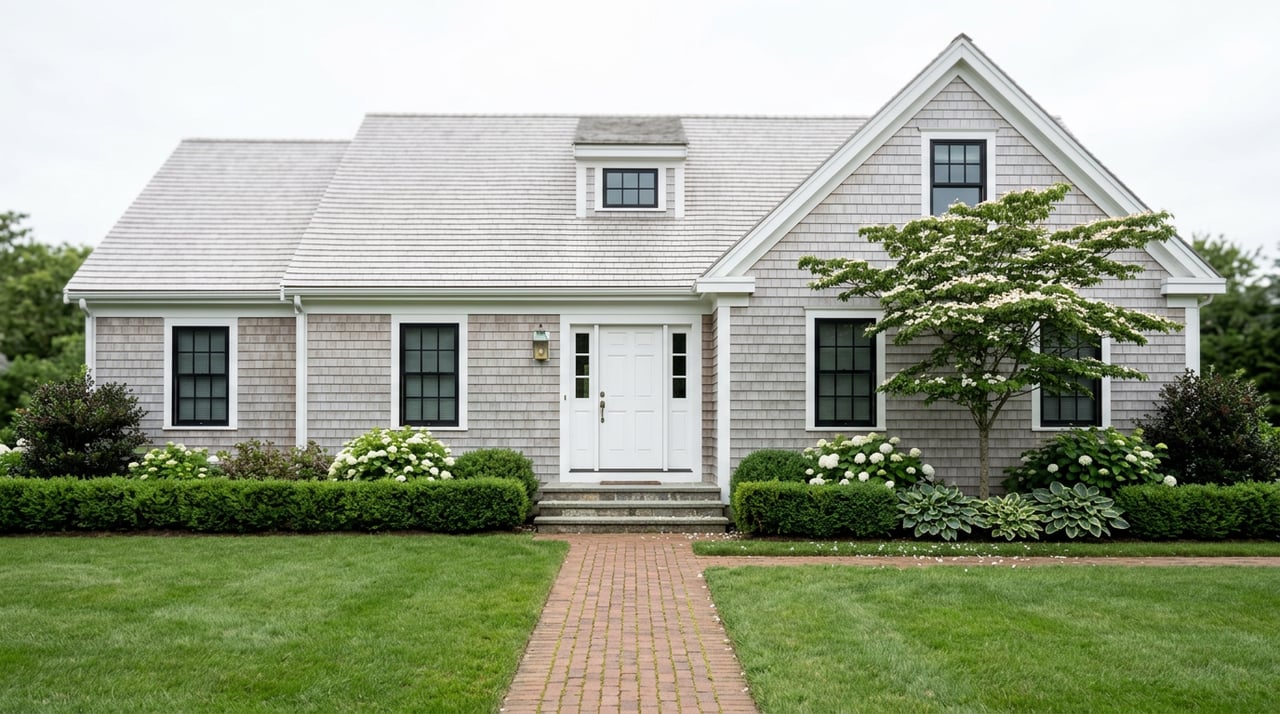
Southport vs Westport Mill Rates: What Buyers Should Compare
September 10, 2026
September 10, 2026
On May 20, the Westport Board of Finance voted to cut the town's mill rate to 13.2, a drop of roughly 30 percent from the prior rate of 18.86. Two weeks later, the Fairfield Board of Finance did something that looked almost identical: it set next year's rate at 19.19, down from 28.39, a cut of similar size. Because Southport is a village inside the town of Fairfield rather than a town in its own right, it carries whatever rate Fairfield's board sets. So the corridor of buyers weighing Southport's harbor village against Westport's broader market now has a new number to compare, and Westport's looks lower.
That comparison is showing up in casual conversation this fall, and it is the wrong one to make. Both towns just finished the same state-mandated process for the same reason, and that process was designed from the outset to make the mill rate, by itself, close to meaningless.
Revaluations help assessments track actual market conditions rather than a decade-old snapshot. Fairfield and Westport both completed that cycle in 2025, and both landed on nearly the same finding: home values had climbed sharply since 2020 while commercial property values had barely moved. Westport's finance director, Gary Conrad, told the Board of Finance that residential assessments rose 59.55 percent on average across the revaluation, while commercial assessments rose only 16.55 percent. Fairfield officials described a nearly identical split between residential and commercial movement in their own town.
A revaluation is supposed to be revenue neutral. The town does not collect more money just because home values went up on paper. It divides the same budget by a much larger grand list, and the rate falls to match. That is the mechanism behind both headlines this spring: 28.39 down to 19.19 in Fairfield, and 18.86 down to 13.2 in Westport. Neither drop is a tax cut. Both are arithmetic corrections for assessed values that just got substantially bigger.
Board members on both sides of the town line were careful to say this out loud. Fairfield board member Jim Walsh pushed back hard on the process itself, arguing that the volume of successful appeals amounted to what he called a wholesale failure of the revaluation. Across the town line in Westport, board member Nancy Dobin put the human stakes more plainly, saying the board was trying to keep in mind the Westporters living on fixed incomes who would still see their bills rise even as the rate on paper fell.
The mechanism is identical in both towns, but the outcome for any one house depends on how that house's assessment moved relative to its own town's average, not on the averages themselves.
Take an anonymous Fairfield example that circulated during the town's revaluation notices: a four-bedroom single-family home assessed at $312,970 in 2020 came back assessed at $553,490 in 2025, a jump of 77 percent, well above the townwide shift. Run that house through both mill rates. At the old 28.39 rate, its bill was roughly $8,885. At the new 19.19 rate, its bill is roughly $10,622. That is an increase of about $1,700, or 19.5 percent, even though the rate itself fell by nearly a third.
Westport's own numbers tell a similar story from the other direction. Longtime Westport civic writer Dan Woog calculated that a home whose assessment rose by 61 percent would see its tax bill increase by roughly 11 percent in dollar terms, even with a mill rate that dropped 30 percent. A home that appreciated less than the town average could see its bill fall. A home that appreciated more, which is the story for a meaningful share of Southport-adjacent listings after a year in which sale prices in the immediate Southport submarket climbed close to 40 percent, is the one still writing a bigger check next July regardless of which town's headline rate looks smaller.
This is the piece the rate comparison hides. Two towns can post nearly identical percentage cuts to their mill rate and still send very different bills to two homeowners, depending entirely on how each specific property's assessment moved against its own town's curve.
Once you set the rate comparison aside, the more useful question is what each town's price actually buys, because Southport and Westport are not really competing for the same buyer.
| Southport (part of Fairfield) | Westport | |
|---|---|---|
| FY2025-26 mill rate | 28.39 | 18.86 |
| FY2026-27 mill rate | 19.19 | 13.2 |
| Residential vs. commercial assessment shift | Officials describe a shift nearly identical to Westport's | Residential +59.55% average, commercial +16.55% average |
| Recent median sale price | About $1.34 million as of July 2026 | $1.299 million in 2020 to $1.985 million in 2025, per town figures |
| Recent pace | Roughly 24 days to contract townwide in early 2026 | Ranged from about 80 days in March 2026 closings to about 43 days in June 2026 closings |
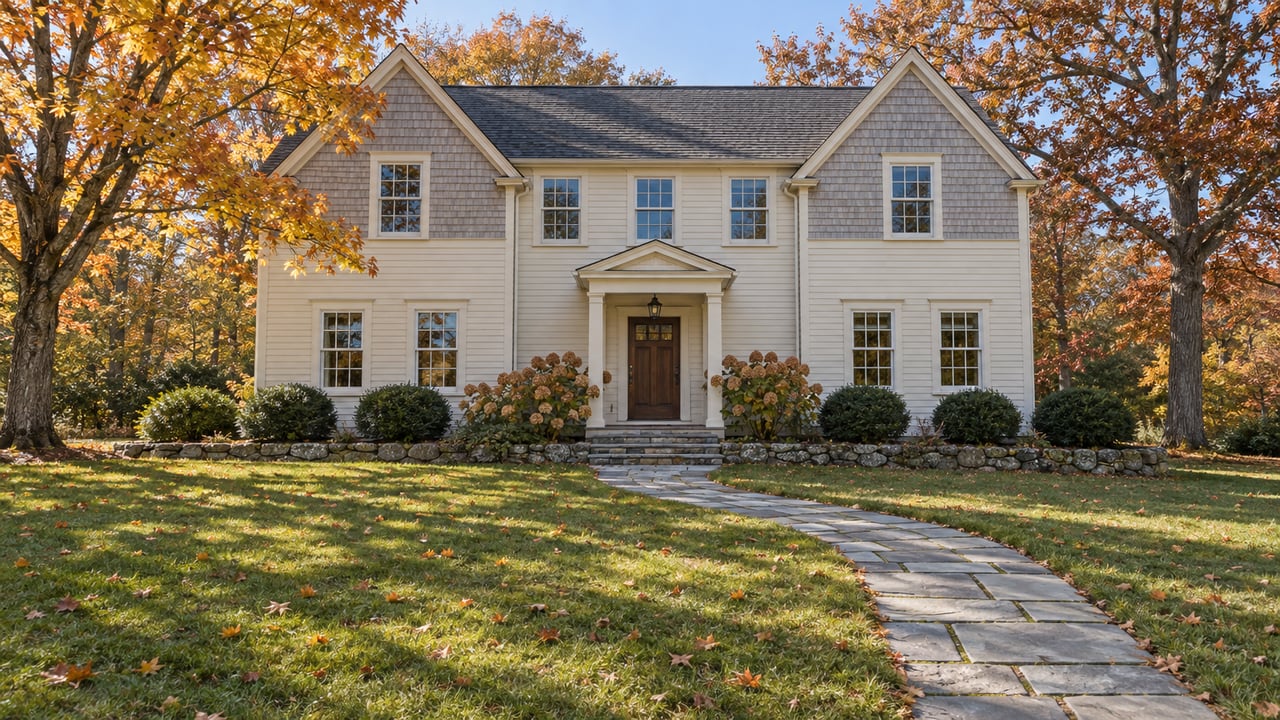
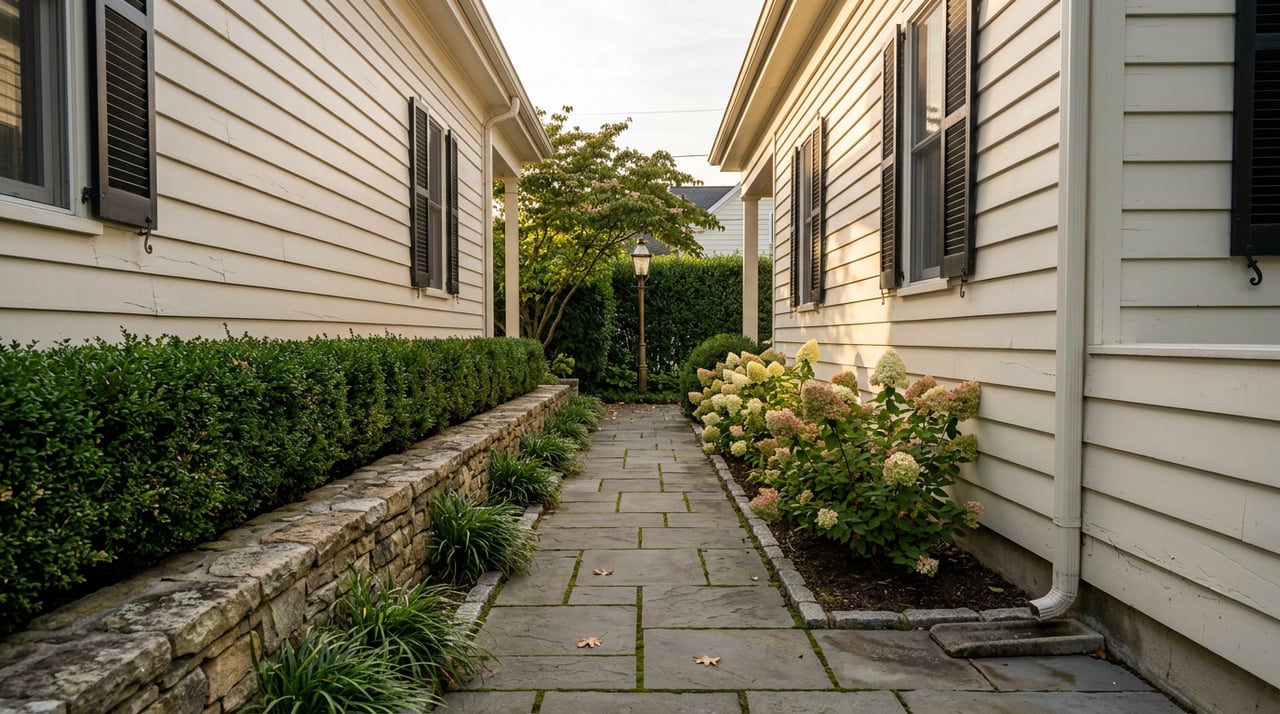
Southport is a fixed, small inventory of largely 18th- and 19th-century homes sitting inside a National Register historic district, walkable to a working harbor and served by its own Metro-North stop, with express trains running roughly 85 to 95 minutes to Grand Central. That is a slightly slower ride than Fairfield's other two stations, and it is the one practical trade a Southport buyer accepts for the quiet of the village. There is no meaningful new construction inside the historic core, and turnover stays low because families who land there tend to stay.
Westport offers a larger, more varied market with new construction options and an active town center, though its own inventory has contracted sharply over the past decade, running closer to 98 single-family homes for sale in June 2026 compared with roughly 494 listed in the same month ten years earlier. Pace has swung this year too, with days to contract nearly doubling from March to a slower spring stretch before compressing again heading into summer.
Neither town is more or less expensive in any simple sense. They are different products, and the tax mechanics only tell you what you will owe, not what you are buying.
Does Southport have its own mill rate separate from Fairfield? No. Southport is a village within the town of Fairfield rather than an incorporated town, so it carries whatever mill rate Fairfield's Board of Finance sets each year, the same as every other neighborhood in town.
If the mill rate fell, why would my tax bill still go up? Because the rate and the assessed value are two halves of the same equation. Connecticut requires revaluation to be revenue neutral, so a much larger grand list produces a lower rate automatically. If a specific home's assessed value rose faster than its town's average, the dollar bill can still climb even as the rate on paper drops.
Is Southport or Westport the better value for a similar coastal home right now? They are not really selling the same product. Southport offers a fixed, small, historic harbor-village inventory with a median sale price near $1.34 million as of July 2026 and very little turnover. Westport offers substantially more inventory, a wider price range, and new construction that generally is not available inside Southport's historic core. The tax math tells you what you would owe in either place. It will not tell you which one is the right fit.
Comparing two mill rates takes thirty seconds. Understanding what actually lands on a specific home's July bill takes a look at that property's own assessment history, not just the headline the town publishes. If you are weighing a purchase or a sale in Southport, Fairfield, or Westport and want that math run against a specific address, Elizabeth Altobelli offers a complimentary home valuation that puts the real numbers, not just the town-wide averages, in front of you.
This article is general information, not legal, tax or financial advice. Consult a qualified professional about your situation.
Stay up to date on the latest real estate trends.
With extensive experience and expertise, Elizabeth is well-equipped to navigate this complex market, negotiating with her client's best interests in mind. She holds great reverence for the successful family business, which led to her joining William Raveis.
Get In Touch With Me To Learn More
Elizabeth Altobelli
2525 Post Road Southport, CT 06890